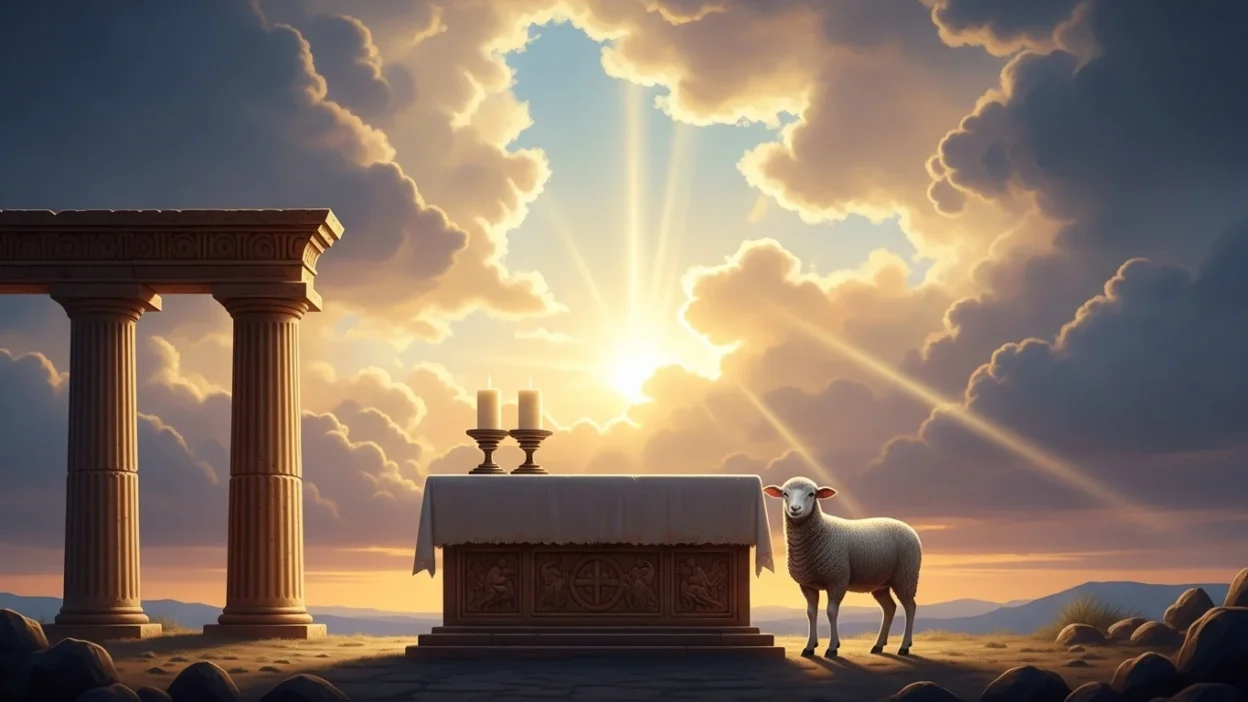
Imagine standing in an ancient place of worship. The air is quiet. People gather with deep respect. An animal is brought to the altar. It is not done with cruelty or anger. It is done with reverence, prayer, and repentance.
For many people today, this scene feels strange. Why would people offer an animal to God? What does it mean?
When we read the Bible, we see that animal sacrifice in Christianity has deep roots in the Old Testament. It was never just about the animal. It was about the heart of the person offering it.
In ancient times, people brought animals to God to show repentance, gratitude, and faith. The sacrifice reminded them that sin has a cost. It also showed their desire to be close to God again.
But the story does not end there.
As we read the Bible, we learn that these sacrifices were pointing to something greater. They were signs of a future promise a perfect sacrifice that would change everything.
So what does animal sacrifice in Christianity really mean? What spiritual message does it carry for believers today?
Let’s explore the Biblical meaning, symbolism, and spiritual lessons behind it.
Biblical Meaning of Animal Sacrifice in Christianity
To understand animal sacrifice in Christianity, we must begin with the Old Testament.
In the early days of the Bible, people offered animals to God as a way to deal with sin. These offerings were part of the worship system God gave to Israel.
One of the clearest examples appears in the book of Leviticus:
“For the life of the flesh is in the blood… it is the blood that makes atonement for one’s life.” — Leviticus 17:11
This verse shows an important truth. In the Bible, blood represents life. When an animal was sacrificed, it symbolized giving life to cover sin.
A Sign of Repentance
Animal sacrifice showed that a person understood their wrongdoing. They came to God with humility.
For example, in Leviticus 4, people offered sacrifices when they realized they had sinned. It was a way of saying:
“God, I know I have done wrong. I seek your mercy.”
This act helped restore the relationship between people and God.
A Way to Worship God
Not all sacrifices were for sin. Some were offerings of gratitude and praise.
In Leviticus 7, people gave peace offerings to thank God for His blessings. These sacrifices showed love, devotion, and trust in God’s goodness.
A Reminder of the Cost of Sin
Another spiritual meaning behind animal sacrifice is the seriousness of sin.
The Bible teaches that sin separates people from God. The sacrifice reminded worshippers that forgiveness is precious and not something to take lightly.
As Romans 6:23 says:
“For the wages of sin is death, but the gift of God is eternal life through Jesus Christ our Lord.”
The sacrifices pointed to this truth long before the New Testament.
The Ultimate Fulfillment in Jesus Christ
In Christianity today, believers no longer practice animal sacrifice. Why?
Because Christians believe that Jesus Christ became the final and perfect sacrifice.
The New Testament explains this clearly:
“Look, the Lamb of God, who takes away the sin of the world!” — John 1:29
Jesus gave His life once for all. His sacrifice replaced the need for repeated offerings.
The book of Hebrews teaches this powerful truth:
“But when this priest had offered for all time one sacrifice for sins, he sat down at the right hand of God.” — Hebrews 10:12
In this way, animal sacrifice in Christianity becomes a symbol that points to Jesus.
It reminds believers of God’s love, mercy, and plan for salvation.
Spiritual Significance and Symbolism
Even though animal sacrifices are no longer practiced in Christian worship, their spiritual symbolism still carries powerful meaning.
First, they remind believers of the seriousness of sin. Sin damages our relationship with God. The Bible teaches that we all fall short.
Yet the story does not end in guilt.
Animal sacrifices in the Bible also reveal God’s deep mercy. He provided a way for people to seek forgiveness and return to Him.
This points to an even greater truth God desires restoration, not punishment.
A Symbol of Redemption
The sacrifice also symbolizes redemption.
Just as an animal stood in place of the sinner, Christians believe Jesus took the place of humanity.
His sacrifice brings hope, healing, and new life.
A Call to Spiritual Transformation
For believers today, the lesson is not about animals on an altar. It is about the condition of the heart.
The Bible encourages Christians to offer something different:
“Offer your bodies as a living sacrifice, holy and pleasing to God.” — Romans 12:1
This means living a life of faith, kindness, and obedience.
Instead of physical sacrifice, God desires a transformed life.
Through prayer, repentance, and trust in God, believers experience spiritual renewal.
Biblical Interpretations in Dreams or Real Life
Sometimes people dream about sacrifices, altars, or animals in a spiritual setting. These images can feel powerful and mysterious.
In a biblical dream interpretation, such symbols may represent repentance, surrender, or spiritual renewal.
For example:
- Seeing a sacrifice peacefully may symbolize letting go of guilt and trusting God’s forgiveness.
- Witnessing an altar in a dream could represent a call to prayer or deeper faith.
- Feeling fear in the dream might reflect inner struggles or the need for spiritual healing.
In real life, learning about animal sacrifice in Christianity can also awaken deeper reflection.
It reminds believers that faith is not just tradition. It is about a living relationship with God.
When people pray, confess, and seek God’s guidance, they experience the true spiritual message behind sacrifice restoration and grace.
Practical Lessons & Faith Insights
The message behind animal sacrifice in Christianity teaches believers several simple truths:
- God offers forgiveness to those who repent.
- Jesus is the final and perfect sacrifice.
- Faith calls us to live with humility and love.
Through prayer and reflection, believers can draw closer to God and walk in faith, hope, and renewal.
Conclusion
The story of animal sacrifice in Christianity is not just about ancient rituals. It is about God’s plan for redemption.
In the Old Testament, sacrifices helped people seek forgiveness and reconnect with God. But these acts pointed to something greater.
Christians believe that Jesus became the perfect sacrifice, bringing lasting grace and salvation.
Today, the spiritual message remains clear: God desires a sincere heart, living faith, and trust in His love.
When believers seek Him with prayer and humility, they discover the beautiful truth behind every sacrifice God’s endless mercy and hope for new life.

Michael James is a content writer and dream-interpretation researcher at DreamDix. With a strong interest in dreams, symbols, and the human subconscious, he focuses on helping readers understand the hidden meanings behind their dreams.