Have you ever felt a sudden heaviness in your heart after doing something wrong? Not shame — but a quiet feeling that says, “I need to change.”
Maybe it came during prayer. Maybe after hurting someone you love. Maybe after reading a Bible verse that felt like it was written just for you.
That feeling is not meant to destroy you. It is meant to lead you back to God.
In the Christian faith, this feeling has a name: repentance.
Many people think repentance means punishment or fear. But in the Bible, repentance is actually about hope, healing, and new beginnings. It is not about God pushing you away — it is about God gently calling you home.
So what is the repentance biblical meaning really about? Why does God speak about it so often? And how does it connect to your spiritual journey today?
Let’s explore what the Bible truly says about repentance — and why it is one of the most beautiful spiritual gifts God offers.
Biblical Meaning of Repentance
At its core, repentance in the Bible means a change of heart and direction.
The original Greek word used in the New Testament is metanoia. It means: to change your mind, your thinking, your inner path.
Repentance is not just saying “sorry.” It is choosing a new way of living with God.
What the Bible Says About Repentance
One of the clearest verses is:
“Repent, then, and turn to God, so that your sins may be wiped out.” – Acts 3:19
This shows repentance has two parts:
- Turning away from sin
- Turning toward God
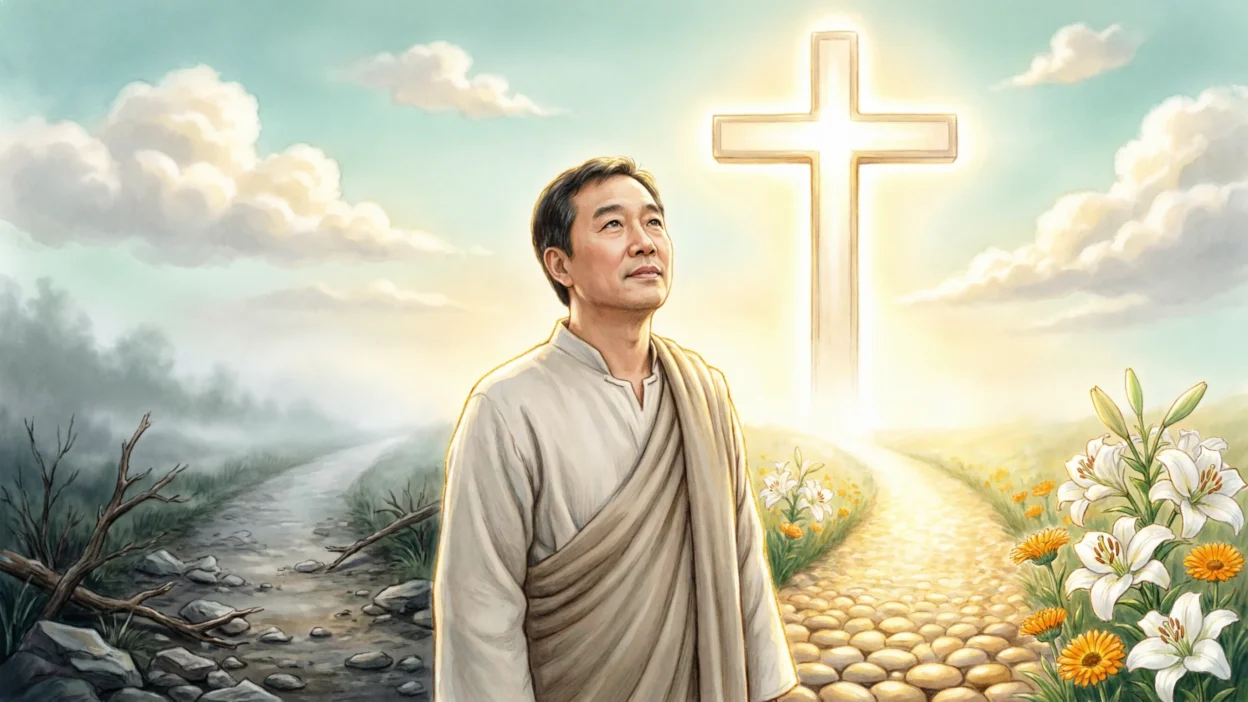
It is a spiritual movement — from darkness to light.
Another powerful verse says:
“The Lord is not slow in keeping His promise… He is patient with you, not wanting anyone to perish, but everyone to come to repentance.” – 2 Peter 3:9
This reveals something beautiful: God desires repentance not to punish — but to save.
Repentance Is an Invitation, Not a Threat
In many Bible stories, repentance leads to mercy:
- Nineveh repented, and God spared the city (Jonah 3).
- King David repented, and God restored him (Psalm 51).
- The prodigal son repented, and the father ran to embrace him (Luke 15).
Repentance opens the door to:
- Forgiveness
- Healing
- Restoration
- New identity
It is how broken hearts become renewed hearts.
Warning and Hope Together
The Bible also shows a warning side. Ignoring repentance leads to spiritual distance.
“If we confess our sins, He is faithful and just to forgive us.” – 1 John 1:9
But if we refuse to repent, we stay trapped in guilt and fear.
So repentance is both:
- A warning: Don’t stay lost.
- A promise: God is ready to forgive.
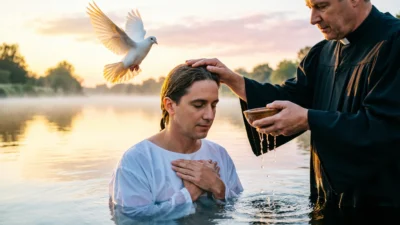
In biblical symbolism, repentance is like washing your soul. It is the moment when you stop running and let God heal you.
Spiritual Significance and Symbolism
Spiritually, repentance represents inner transformation.
It is the moment when:
- Pride becomes humility
- Fear becomes trust
- Shame becomes grace
Repentance is not about being perfect. It is about being honest with God.
Repentance as Spiritual Awakening
Many people experience repentance during:
- Deep prayer
- Emotional pain
- Life changes
- Spiritual reflection
It feels like a spiritual awakening. Your heart becomes soft again. You begin to see yourself through God’s eyes.
Not condemned. But loved.
Repentance and the Presence of God
In Christian belief, repentance often brings a strong sense of:
- Peace
- Lightness
- Relief
- Clarity
It is a sign of God’s presence working inside you.
When someone repents sincerely, the Holy Spirit begins to:
- Heal wounds
- Break old patterns
- Renew faith
Repentance is not loss. It is rebirth.
It is the soul saying: “God, I trust You more than my mistakes.”
Biblical Interpretations in Dreams or Real Life
Sometimes repentance appears in symbolic ways.
In dreams, people often see:
- Crying
- Being washed
- Returning home
- Kneeling
- Light after darkness
These are signs of spiritual cleansing and renewal.
Peaceful vs. Fearful Experiences
If repentance feels peaceful:
- It means God is gently guiding you.
- You are being invited into deeper faith.
If repentance feels heavy or emotional:
- It may mean your heart is releasing long-held guilt.
- Healing is taking place.
In real life, repentance often shows up as:
- A sudden desire to pray
- Feeling convicted but hopeful
- Wanting to forgive others
- Letting go of harmful habits
These are not random feelings. They are divine messages calling you closer to God.
Practical Lessons & Faith Insights
Repentance is not a one-time event. It is a daily spiritual practice.
Simple ways to live in repentance:
- Pray honestly.
- Forgive quickly.
- Reflect often.
- Trust God’s mercy.
Repentance keeps your heart soft and your faith strong.
Conclusion
The repentance biblical meaning is not about fear. It is about returning to love.
Repentance is God’s way of saying: “Come back. I never stopped loving you.”
When you repent, you do not lose yourself. You find who you were always meant to be — restored, forgiven, and held in God’s grace.
And every time you turn back to Him, He is already waiting with open arms.